
FOOD WASTE COMPOSTING MACHINE
BioGEN S50/S250
A food waste composting machine is a system designed to convert organic waste generated in cafés, restaurants, and catering facilities into compost through a controlled composting process. BioGEN-S50 is the smallest food waste composting machine manufactured by GENEMA. It is primarily designed for cafés and restaurants, where food waste is generated continuously but in relatively small quantities.
The next model, BioGEN-S250, operates with the same working principle and equipment configuration. It is generally produced for sites such as residential complexes, campuses, and similar facilities where food waste is generated in higher volumes.
Why Choose a Food Waste Composting Machine?
When food waste is left untreated, it often begins to smell, leak, and attract flies. This can create discomfort both at the point where the waste is generated and in the surrounding environment. Regularly collecting and removing this type of waste creates an additional operational burden and also means giving up a valuable organic resource.
In fact, when food waste is composted effectively on site, it can be transformed into a highly valuable material that is difficult to replace in terms of its environmental benefits. For this reason, a food waste composting machine offers an efficient and practical solution for managing organic waste at its source while supporting sustainable waste recovery.
Applications of Food Waste Composting Machines
Although not limited to the following, food waste composting machines are commonly used or recommended in locations such as:
- Restaurants
- Cafés
- Hotels
- Industrial kitchen and mass catering facilities
- University and school campuses
- Residential complexes and site managements
- Hospital cafeterias
- Factory cafeterias
- Catering companies
Easy Operation in Composting
Considering the typical usage areas, it is not realistic to expect the personnel managing a food waste composting operation to be experts in composting. For this reason, special attention has been given to making GENEMA BioGEN series compost bioreactors, especially smaller models such as the BioGEN-S50 and BioGEN-S250, easy to operate and simple to monitor with minimal effort.
Central Shaft Composting Chamber
- The composting machine is equipped with a central shaft structure that provides homogeneous mixing inside the chamber.
- This shaft design ensures that the waste is rotated in a balanced and controlled manner throughout the composting process.
Aeration System
- The machine includes an aeration system designed to provide controlled airflow that supports the composting process.
- This airflow management helps create the proper conditions for aerobic biological activity.
Odor Control System
- To make the composting process suitable for indoor operation, the system is designed to reduce odor-related compounds.
- It features an odor control infrastructure that works in harmony with the aeration line.
Safe Lid Mechanism
- The machine is equipped with a safe lid mechanism that ensures controlled opening and closing movements.
- It also helps prevent contact between the operator and moving mechanical parts during operation.
Motor Protection System
- The motor protection system helps protect the motor against overload, excessive strain, and unsuitable operating conditions.
- It works in coordination with the drive and electrical infrastructure of the machine.
Waste Quantity Measurement System
- The machine includes a load cell-based measurement system that allows operators to monitor the amount of waste processed inside the composting unit.
One-Touch Operation
- The system can be easily monitored and managed through a touchscreen interface.
- No special expertise is required to operate the composting machine, making it practical for daily use in commercial and institutional facilities.
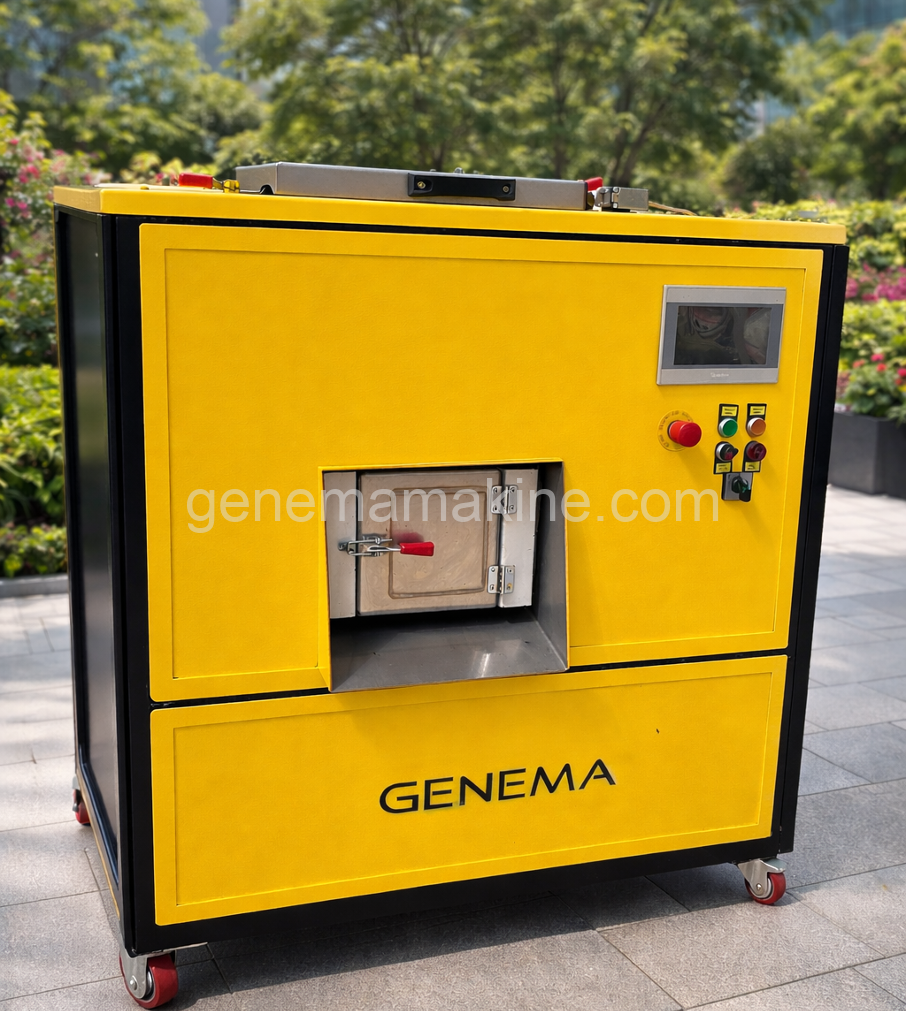
Food waste compost machine
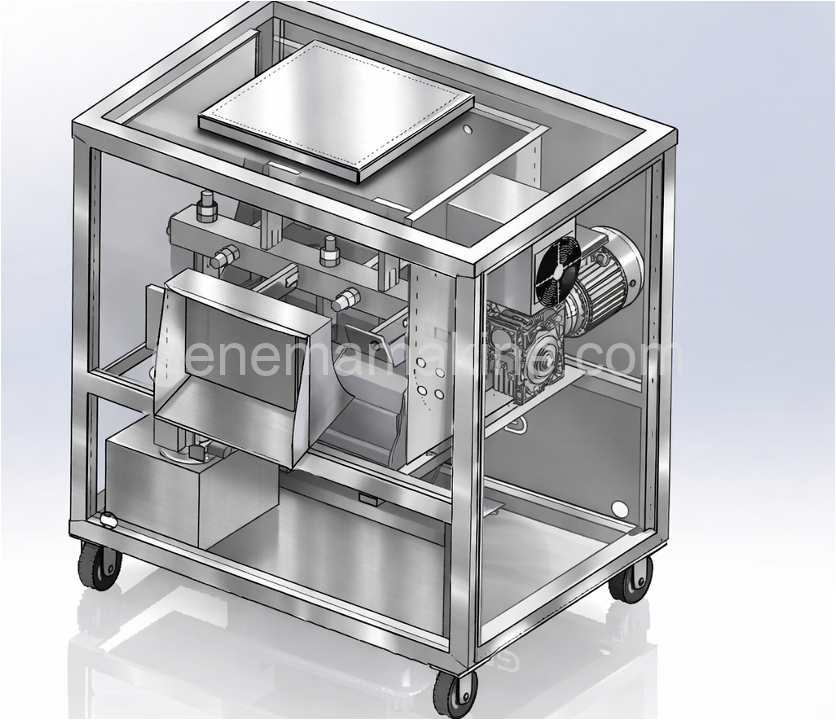
3D General View of the Compost Bioreactor Design
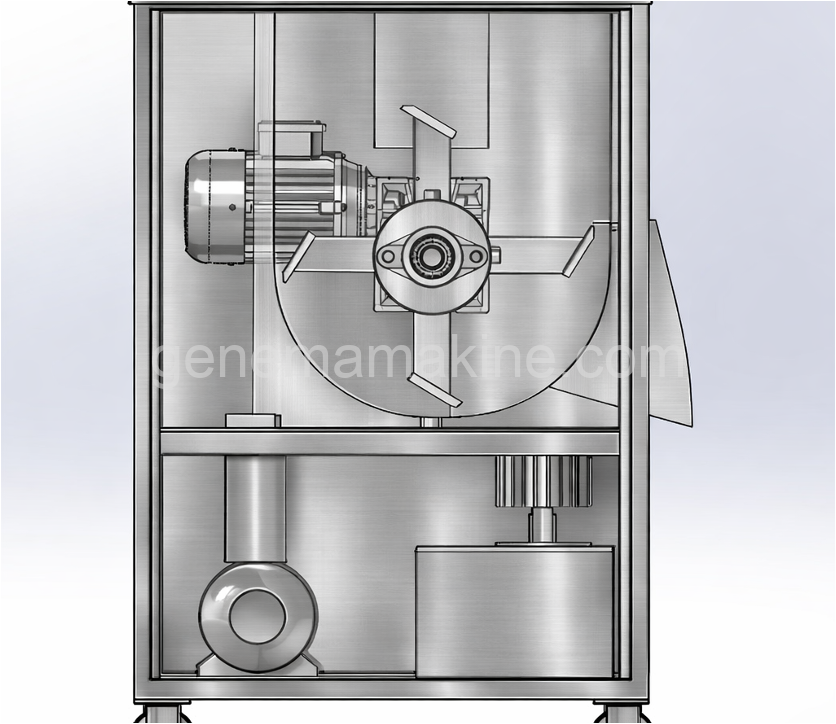
Compost Bioreactor Design – 3D Side View
| Criteria | BioGEN S50/S250 | Many Other Systems |
|---|---|---|
| Process Logic | Controlled Biological Composting | Drying Only |
| Main Objective | Obtaining a valuable organic output (compost) | Rapidly reducing and lightening waste |
| Time claim | Focused on process quality | Focused on “results in 12–24 hours” |
| Water removal | It is part of the process, but not the main objective | In many cases, this is the primary benefit |
| Need for additives | Natural composting using only the waste itself | Microbial tablets, accelerators, and other additional consumables that are continuously required |